🎧 This one hits different!
Just dropped something special for you 🔥Go listen on Audiomack and tell me how it feels. Drop your comment, likes under audiomack and take screenshot to earn ombes rewards.
Don’t forget to come back here and drop your comment 👇Let’s rate it together 💯
Category: Lifestyle
Building Stronger Neighborhoods in Lagos: Otoariaverse, Community Communality, and Localising the Economy
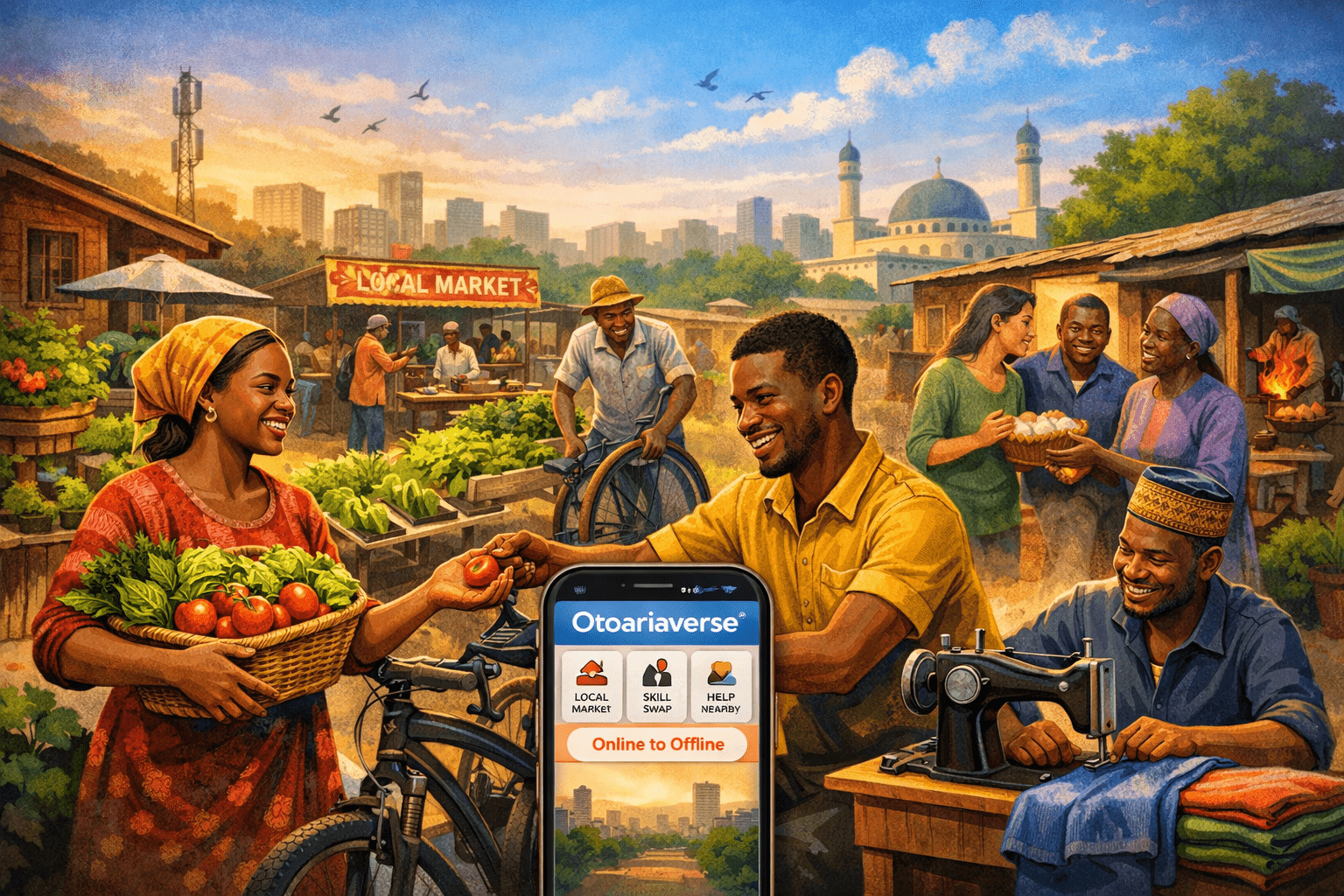
In a busy Lagos neighbourhood, a group of friends checks their phones in the evening. One posts about extra tomatoes from her small backyard garden. Another replies that he can fix bikes and needs some vegetables for his family. Within hours, they meet at the street corner, swap goods, chat about old stories from their village, and plan to plant more together next weekend. No big shops involved, no long deliveries from afar. This simple moment shows three powerful ideas working together: Otoariaverse, community communality, and localisation of the economy. They are not fancy theories – they are practical ways ordinary people can create resilient, happy communities right where they live.
What Is Otoariaverse?
- Otoariaverse is a new way of seeing our world as one connected space – part digital screen, part real streets and homes.
- Think of it as a shared universe where your culture, daily life, and technology blend smoothly. It is like an online gathering place built for people like us, where you join groups with neighbours, share ideas, and turn online talk into real actions.
- Instead of just scrolling alone, Otoariaverse lets you discuss local traditions, organize help for someone sick, or plan a market day – all from your phone. Then you step outside and make it happen face-to-face. It brings shared spaces alive: the digital part keeps everyone linked even when busy, while the physical part keeps the warmth of real hugs and shared meals. In everyday terms, it turns your phone into a tool that strengthens your block, your compound, or your village, mixing online chats with offline cooperation.
Community Communality:
The Power of Looking Out for Each Other
- Communality simply means living like one big family in your neighbourhood. Everyone takes a small share of responsibility, works together, and supports one another without waiting for outside help. It is not about grand gestures. It is the daily habit of “your problem is our problem.”
- When this happens, social bonds grow strong. People feel safer and happier because they know help is close by. For example, in many Nigerian neighbourhoods, families rotate to check on elderly aunties – one cooks, another runs errands. Or young people organize weekend clean-ups and everyone brings food to share afterward. These small acts build trust. Children learn to care, adults feel less alone, and the whole community becomes tighter. No one is left behind. Communality turns strangers into reliable friends and makes tough times easier to handle.
Localisation of the Economy: Keeping Money and Skills Close to Home
- Localisation means focusing our daily buying, making, and trading right in our own area. Instead of always depending on big companies far away or imported goods that cost more and sometimes disappear, we grow, produce, and buy locally. We value the skills people already have around us.
- This reduces dependency on outside systems that can fail – like when fuel prices rise or supply chains break. Money stays in the community, creating more jobs and opportunities close by. Everyday examples make it clear:
- Local farming: A group of neighbours turns empty plots or rooftops into small gardens. They grow okra, spinach, and yam. They sell or swap the harvest at a weekly street market instead of buying expensive vegetables trucked in from distant farms.
- Neighbourhood trade: Someone with a sewing machine mends clothes for neighbours. In return, another person who keeps chickens offers eggs. No cash always needed – simple swaps keep everyone fed and clothed.
- Community digital platforms: Using something like Otoariaverse, people post “I need a plumber” or “I teach basic phone repairs.” Matches happen fast within walking distance, and skills spread from person to person.
- When these three ideas join forces, magic happens. Otoariaverse acts as the digital glue. You use it to find local farmers, organize trade groups, or share cultural stories that keep traditions alive. Communality provides the caring spirit that makes people show up. Localisation keeps the benefits flowing back into the neighbourhood instead of leaking away. Together, they build resilience – your community can stand strong even when bigger systems shake.
Practical Steps Communities Can Take Today
You do not need millions or big government help to start. Here are real actions that work in any neighbourhood:
a. Start a small garden or poultry project and use a group chat on a platform like Otoariaverse to coordinate planting days and share seeds.
b. Set up a weekly “swap and sell” corner – one person brings tools to repair, another brings food. Post updates online to spread the word.
c. Create skill-sharing circles: Teach each other phone fixing, tailoring, or basic bookkeeping. Record short videos on the platform so absentees can learn later.
d. Reward local effort: In your group, give simple shout-outs or small points for people who buy or trade locally. It encourages everyone.
e. Blend digital and physical: Hold online discussions about preserving local recipes or festivals, then meet in person to cook or celebrate together.
These actions cost little but create a lot of value. They keep culture alive, money circulating locally, and people connected.
Your Step-by-Step Checklist to Start in Your Community
Use this simple list to begin building resilience and shared prosperity. Do it one step at a time – even with five or ten people.
- Map your people and skills: Walk around or chat with neighbours. List who grows food, who repairs things, who knows first aid, or who has extra space. Write it down in a shared notebook or phone note.
- Set up your digital home: Join or create a local group on Otoariaverse (or any simple community app). Name it after your street or area. Invite everyone and set one rule: “We focus on helping each other locally.”
- Launch one small shared project: Pick something easy – a community garden, a repair day, or a food swap. Set a date, use the platform to remind people, and meet in person to make it happen.
- Track and celebrate local wins: Every month, note what was grown, swapped, or fixed locally. Share success stories online and in person. This keeps motivation high.
- Expand slowly: Once the first project works, add another – maybe a skill workshop or cultural storytelling night. Keep everything within walking distance or short bus rides.
- Review and adjust: After three months, ask the group: “What is working? What can we improve?” Make changes together so everyone feels ownership.
Start today with just step one and step two. In a few weeks, you will see stronger bonds, fresher food on tables, and money staying in your neighbourhood. That is the Otoariaverse spirit in action – digital tools meeting real-life care and local effort.
When communities choose this path, they do not just survive hard times; they thrive. Families eat better, children learn useful skills, and everyone feels proud of what they build together. It is not about waiting for change from outside. It is about creating it right where you are, one neighbour at a time. Your street can be the start.

THE ENIGMA OF ANKARA
THE ENIGMA OF ANKARA.
Runways in Paris, London, New York, and Milan now feature Ankara-inspired collections. International celebrities, musicians, and influencers wear the fabric, amplifying its visibility and appeal. What was once dismissed as “ethnic” has become fashionable, desirable, and innovative.
Yet Ankara’s global success has raised questions about ownership and cultural appropriation. Some major fashion houses and fast-fashion brands use Ankara-inspired prints without acknowledging its African roots or supporting African producers. For many Africans, Ankara is not merely a trend but a lived cultural expression. The conversation around appropriation versus appreciation underscores the importance of ethical collaboration, fair trade practices, and recognition of African creativity within global fashion systems.
Beyond Clothing: Ankara’s Expanding Role
Today, Ankara is used far beyond clothing. The fabric appears in interior design, accessories, footwear, art installations, and even corporate branding. Young creatives experiment with gender-neutral designs, sustainable production methods, and digital printing technologies. Ankara adapts without losing its essence, proving its remarkable versatility and enduring relevance.
The true enigma of Ankara lies in its contradictions. It is local and global, traditional and modern, industrial and personal. Its non-African origin does not diminish its African identity; rather, it underscores Africa’s power to absorb, transform, and redefine external influences. Ankara is proof of cultural agency—showing how people can reclaim narratives and create meaning on their own terms.
The Symbolism of Wearing Ankara
Wearing Ankara today is often an assertion of confidence and creativity. It celebrates heritage while allowing for individual expression. Across continents, the fabric connects people to history and identity, while offering room for innovation and reinvention. Its journey—from Indonesian batik to African icon to global fashion staple—reflects broader narratives of migration, exchange, resistance, and reinvention.
In an era increasingly shaped by globalization, Ankara reminds us that culture is alive, dynamic, and adaptable. Patterns may repeat, but meanings continue to evolve—layered, vibrant, and unresolved. Like the cultures it represents, Ankara remains resilient, expressive, and unapologetically alive, ensuring that its story is not only remembered but continually rewritten.
THE ENIGMA CLOTHING CALLED ANKARA.
This is the beauty of our Fashion and Style in Nigeria today
Nigeria is renowned for its vibrant fashion scene, with a unique blend of traditional and modern styles. From the intricately designed Ankara prints to the sleek, modern designs of Nigerian fashion brands, the country’s fashion industry is a true reflection of its rich cultural heritage.
How can you talk of Evolution of Nigerian Fashion.
Nigerian fashion has come a long way, influenced by the country’s history, culture, and global trends. Traditional attire like Agbada, Dashiki, and Kaftan continue to be popular, while modern styles like Afro-chic and Ankara fusion have gained international recognition.
This are the Key Players in Nigerian Fashion today
Zaira Nara: Known for her bold, eclectic designs that blend traditional and modern elements.
Lala Akindoju: A pioneer of sustainable fashion in Nigeria, using eco-friendly materials and practices.
Maison Lameloise: A luxury fashion brand that showcases Nigerian craftsmanship and attention to detail.
And this are the Trends Shaping Nigerian Fashion:
Ankara Prints: A staple in Nigerian fashion, these vibrant prints are being used in innovative ways.
Sustainable Fashion: Eco-friendly materials, upcycling, and responsible production practices are gaining traction.
Fusion Fashion: Blending traditional and modern elements to create unique, stylish pieces.
Talking of Style Tips for our women in Nigerian
Emphasize Your Waist: Highlight your curves with fitted dresses or tops and skirts.
Add a Pop of Color: Incorporate vibrant colors and patterns into your outfit.
Invest in Quality Pieces: Build a timeless wardrobe with statement pieces.
Also for the Style Tips for our Men in Nigerian
Dress for the Occasion: Understand the dress code and dress accordingly.
Invest in a Good Suit: A well-tailored suit is a worthwhile investment.
Accessories Matter: Add personality to your outfit with hats, watches, and shoes.
Nigerian fashion is a true reflection of the country’s creativity, diversity, and style. Whether you’re a fashion enthusiast or just looking to upgrade your wardrobe, Nigeria’s fashion scene has something to offer.
the-enigma-of-ankaraBlogs
The Intersection Of Business Wellness
The Intersection of Business and Wellness:
How Nigerian Entrepreneurs Can Thrive.
Nigerian entrepreneurs can thrive in business while prioritizing their wellness. By incorporating simple strategies and leveraging resources, entrepreneurs can improve their mental, physical, and emotional health. This, in turn, can lead to increased productivity, creativity, and success.
In today’s fast-paced business world, entrepreneurs often prioritize productivity over personal well-being. However, neglecting wellness can lead to burnout, decreased productivity, and poor decision-making. Nigerian entrepreneurs, in particular, face unique challenges that make prioritizing wellness crucial for success.
The Current State of Wellness in Nigerian Business Environment
Many Nigerian entrepreneurs work long hours, often sacrificing their physical and mental health. According to a study, 70% of Nigerian professionals experience stress-related illnesses. This can lead to decreased productivity, strained relationships, and a higher risk of chronic diseases.
The Benefits of Prioritizing Wellness can have a significant impact on business success. Some benefits include:
– Improved mental clarity and focus
– Enhanced creativity and innovation
– Better decision-making and problem-solving
– Increased energy and productivity
– Improved relationships and communication
So, how can Nigerian entrepreneurs prioritize wellness? Here are someStrategies for Nigerian Entrepreneurs
1. Start small:
Begin with short meditation sessions, yoga classes, or daily walks.
2. Set boundaries:
Establish a healthy work-life balance and prioritize self-care.
3. Build a support network:
Connect with fellow entrepreneurs and wellness professionals.
4. Leverage technology:
Utilize wellness apps, online resources, and social media.
5. Make time for self-reflection:
Regularly assess your priorities and goals.